Why Executive Coaching Scales with AI Practice & Feedback
Many companies invest heavily in executive coaching ($500 - $700/hr, up to $50,000 per executive, with ROI sometimes cited at nearly 800%). Senior leaders value the relationship, trust their coaches, and gain meaningful insight into how they show up. Over time, executives become more self-aware and more intentional in their leadership. And yet, in many organizations, the day-to-day experience of leadership does not change as much as expected. Managers still avoid hard conversations. Feedback still lands unevenly. Issues that should be handled within teams continue to escalate upward. Coaching works, but much of its value remains locked inside individual insight rather than showing up consistently across the organization. When these conversations are avoided, the cost rarely stays contained within the team.
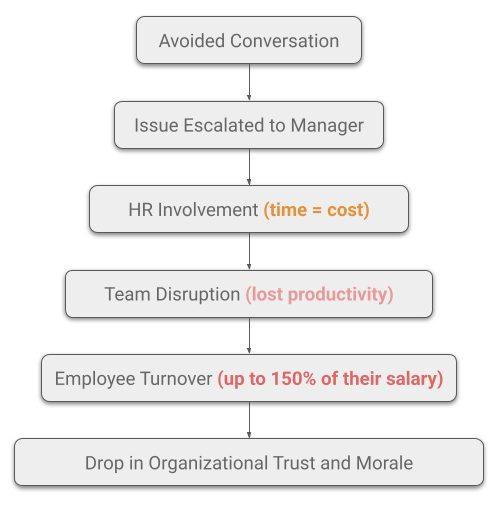
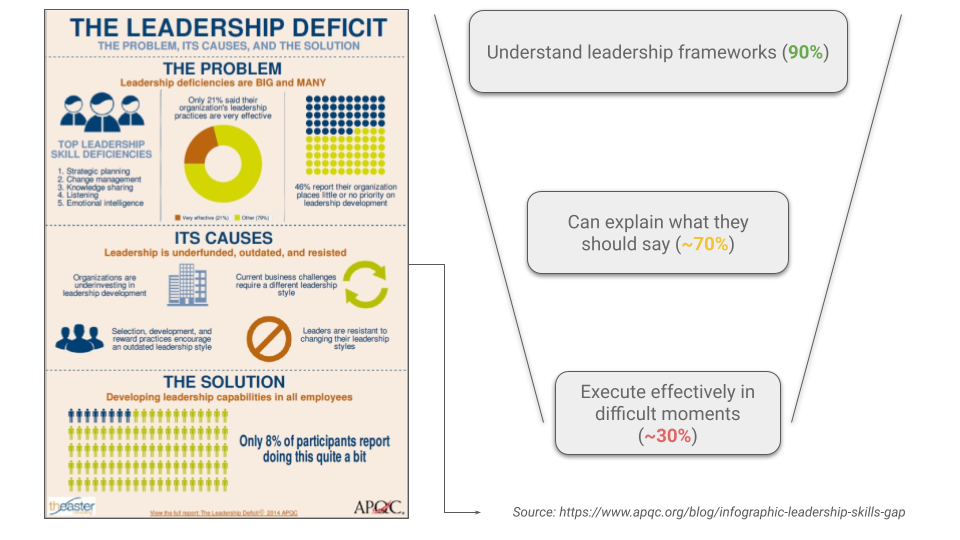
The problem is not that managers do not understand what good leadership looks like. Most have learned the frameworks, attended the workshops, and talked through real situations with their coaches. The breakdown happens in the moments that matter most, when emotions are high, time is limited, and someone pushes back in an unexpected way. Without a practical way to rehearse those situations, insight rarely turns into reliable behavior. Under pressure, people default to what feels familiar, even when they know better.
Addressing this gap does not require rethinking how coaching firms or their clients operate. Coaching firms already define the skills, scenarios, and language they believe matter. Relativ.ai takes that existing expertise and turns it into realistic practice experiences using AI. Clients introduce it alongside coaching in a structured but non-intrusive way, often tied to common leadership moments such as role transitions, feedback cycles, or upcoming high-stakes conversations. Use is guided by coaches and normalized across roles or levels, rather than left entirely to individual initiative or positioned as a form of evaluation.
When managers have a chance to practice in this way, the effect is noticeable. Instead of talking about leadership in the abstract, they work through conversations they know are coming. They experiment with how to address a missed commitment, how to respond when someone becomes defensive, or how to push for clarity without escalating tension. In a short session, they can see where their language breaks down and what actually lands. Practice does not make decisions for them, but it reduces uncertainty and helps them show up more prepared.
Executives engage differently. They are not interested in ongoing training, and they do not need it. What they value is preparation when the stakes are high and the margin for error is small. Used this way, practice becomes a tool for reducing surprises and avoiding unnecessary escalation. Over time, executives begin to notice that leadership feels more consistent across levels, not because standards have changed, but because managers are better equipped to meet them.
For executive coaches, this shifts the work in meaningful ways. Coaching conversations spend less time reconstructing what happened and more time identifying patterns in how leaders respond under pressure. Instead of relying solely on self-reporting, coaches can use Relativ’s cohort dashboards and call analysis frameworks to see where someone hesitates, overexplains, or retreats when challenged. Practice and real-world calls surface behaviors. Coaching adds the much-needed layer of interpretation and course-correction. The work becomes more focused, rather than more mechanical.
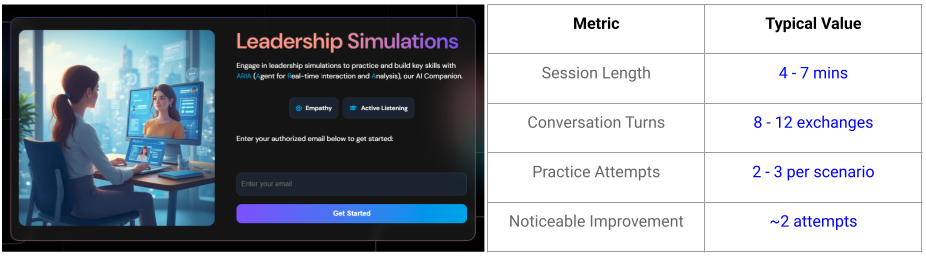
How does this show-up in practice?
In practice, this shows up around moments that already create risk and rework. A client is entering a performance cycle, a reorg, or a wave of role transitions. The coaching firm works with the CHRO to identify a small set of conversations where breakdowns tend to repeat - giving difficult feedback, addressing missed commitments, or resetting expectations with experienced but resistant managers. Coaches recommend practice ahead of these moments as a way to reduce cleanup, not as training. Individuals use it privately, on demand, wherever they are, often for just a few minutes to pressure-test how they open the conversation or respond to pushback. In some cases, practice can happen directly off real work, such as reflecting on a recent call, rather than pulling people into separate training sessions. What comes back to the coaching firm and the CHRO is not individual data, but anonymized, cohort-level patterns showing where skills are breaking down across the organization. That signal guides organizational upskilling and coaching focus, while individuals retain a safe space to practice without evaluation. The result is less time away from the job, more targeted development, and leadership behaviors that improve without creating new risk or resistance.
If you are an executive coaching firm and want to unlock AI capabilities overnight to extend your impact, reduce risk, and help leaders practice the conversations that matter most, partner with Relativ.ai today by scheduling a demo or emailing the team ([email protected]).